White Rice20 YEARS
WASH · Film Screenings · Punjab
UNICEF Pakistan · DREAMS-I · Rawalpindi & Bahawalpur

Film for
Change.

Transforming 20,000 Lives Through Stories: Cinema-Quality Behaviour Change Screenings Across Punjab

300+ community film screenings. 20,000 lives touched. 14,000 girls and women reached. In partnership with UNICEF, ADB, and the Government of Punjab, White Rice used the proven power of cinema and facilitated storytelling to shift how communities in Rawalpindi and Bahawalpur manage water and waste, building climate resilience from the ground up.

Year2023 – 2025
ClientUNICEF Pakistan · DREAMS-I
PartnersADB · Government of Punjab · WASA Rawalpindi · BWMC
CitiesRawalpindi · Bahawalpur
White Rice RoleFilm Production · Screening Programme · Behaviour Change Design
Our Role

Film Production, Facilitation Design & Behaviour Change Architecture

White Rice designed and delivered the entire Film for Change programme under DREAMS-I, a joint initiative of UNICEF, the Asian Development Bank, and the Government of Punjab to build climate resilience across urban Punjab. Our mandate was to produce cinema-quality short films featuring recognisable public figures, design a structured facilitation methodology for converting emotional engagement into behaviour change, train frontline social mobilisers, and scale across 50 schools in two cities in under three months. The programme reached 20,000 children, youth, and community members, with a deliberate equity focus ensuring 14,000 girls and women were at the centre of the effort.

Film Production (Water Conservation & Waste Segregation)Celebrity Talent IntegrationFacilitation Methodology DesignScreening Programme ArchitectureSocial Mobiliser TrainingReal-Time Cloud MonitoringBehaviour Change ToolkitTheory of Change DesignQualitative Insights Capture
01

Key Outcomes

20,000+
Children, youth, and community members reached across 50 schools in Rawalpindi and Bahawalpur, with the programme completed in under three months.
300+
Film screenings delivered across schools and communities, each followed by structured facilitation, behaviour pledging, and visual reminder placement.
14,000+
Girls and women reached, reflecting a deliberate equity design that centred those who manage water and waste in Punjab households every day.
2,000+
Action photos submitted by families showing behaviour reminders placed in kitchens, bathrooms, and near water points, proving early adoption in the home.
500+
Video testimonials captured through real-time cloud-based monitoring, documenting genuine attitude and behaviour shifts across both cities.
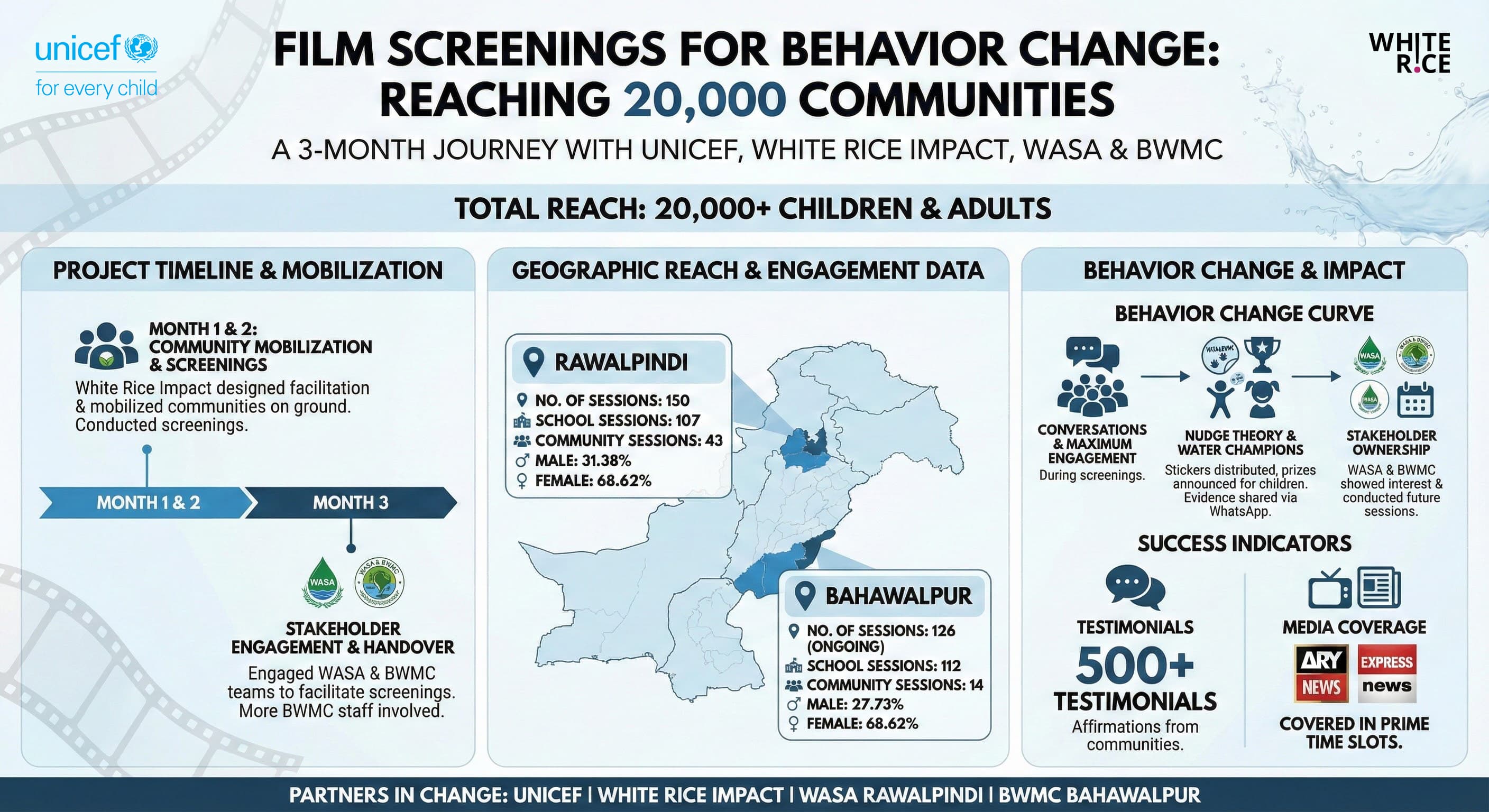
Film Screenings for Behaviour Change: Reaching 20,000 Communities — geographic reach, Rawalpindi and Bahawalpur data, behaviour change curve and success indicators

The Challenge

Urban Punjab faces a mounting environmental crisis: water scarcity, waste mismanagement, climate stress, and cascading public health consequences. Infrastructure alone cannot solve these problems. In Rawalpindi, taps run and coolers leak and hoses flood the street, not because people don't care, but because the habit has never been confronted with something that felt personal. In Bahawalpur, wet and dry waste commingles in bins and on streets because no one has made the alternative feel real, achievable, or important.

UNICEF and its partners under the DREAMS-I programme understood that the largest infrastructure investment in water and waste systems would fall short of its potential without a parallel investment in behaviour. Long-term climate resilience begins at home, in the decisions made at the tap, at the dustbin, and in the conversations families have around these daily acts.

Infrastructure alone cannot solve these problems. Long-term resilience depends on everyday behaviours, how water is used, how waste is managed, and how communities engage with municipal systems.
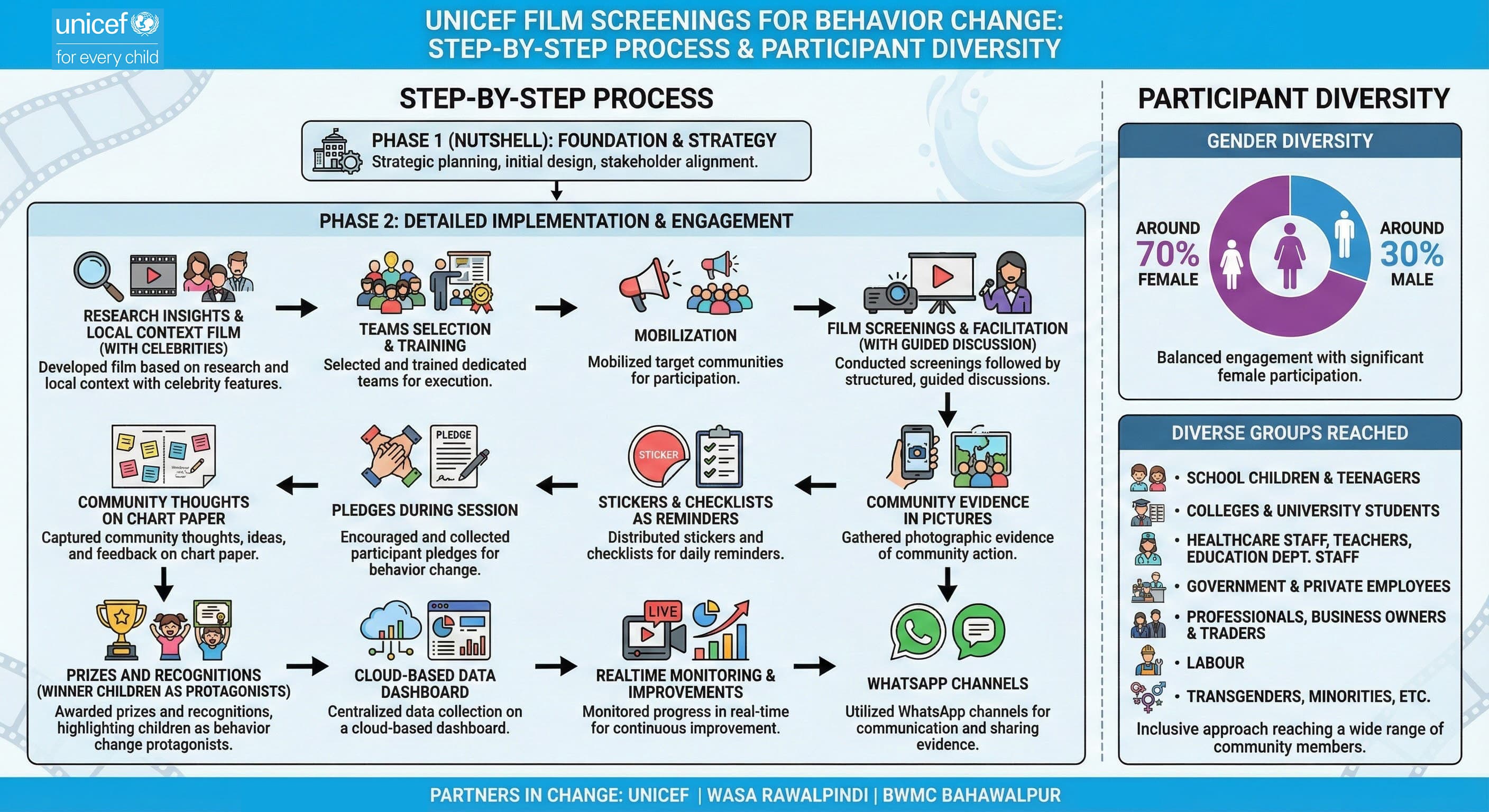
UNICEF Film Screenings for Behaviour Change: Step-by-Step Process and Participant Diversity infographic showing implementation methodology

The Strategy

30 years of global evidence shows that Entertainment-Education works. Stories bypass resistance, create emotional identification, and model the behaviours we want communities to adopt. White Rice designed a five-stage theory of change: from screening to sustained action.
01
Film Screening
Relatable stories featuring recognisable public figures create emotional engagement and personal recognition. Water conservation starred Sarwat Gillani. Waste segregation featured Behroze Sabzwari. Faces audiences already trusted, telling stories that felt like their own.
02
Facilitated Discussion
Trained facilitators guided open-ended reflective discussions using participatory techniques, converting emotional reaction into conscious reflection and personal meaning-making.
03
Personal Reflection
Participants reassessed their own habits, considered specific alternatives, and identified the smallest possible step they could take that same day.
04
Social Reinforcement
Visual reminders, behaviour pledges, and stickers placed at water points and waste bins in homes created environmental cues that reinforced intention in the moments of decision.
05
Early Action
Small, achievable practices, turning off the tap while brushing, fixing a leaking cooler, separating wet and dry waste, were tested daily, building confidence and social normalisation.
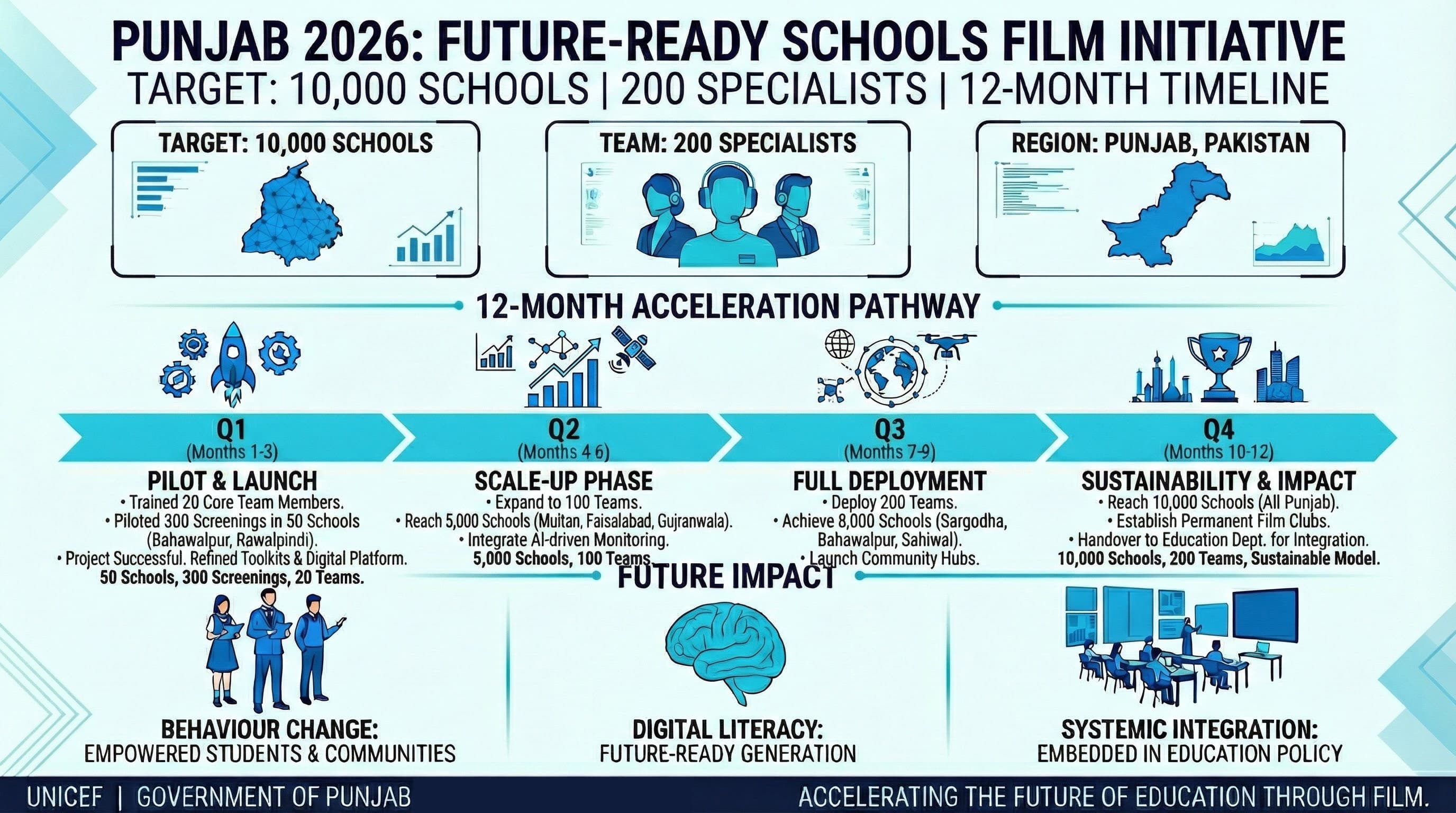
Punjab 2026: Future-Ready Schools Film Initiative — 12-month acceleration pathway to reach 10,000 schools across Punjab

The Intervention

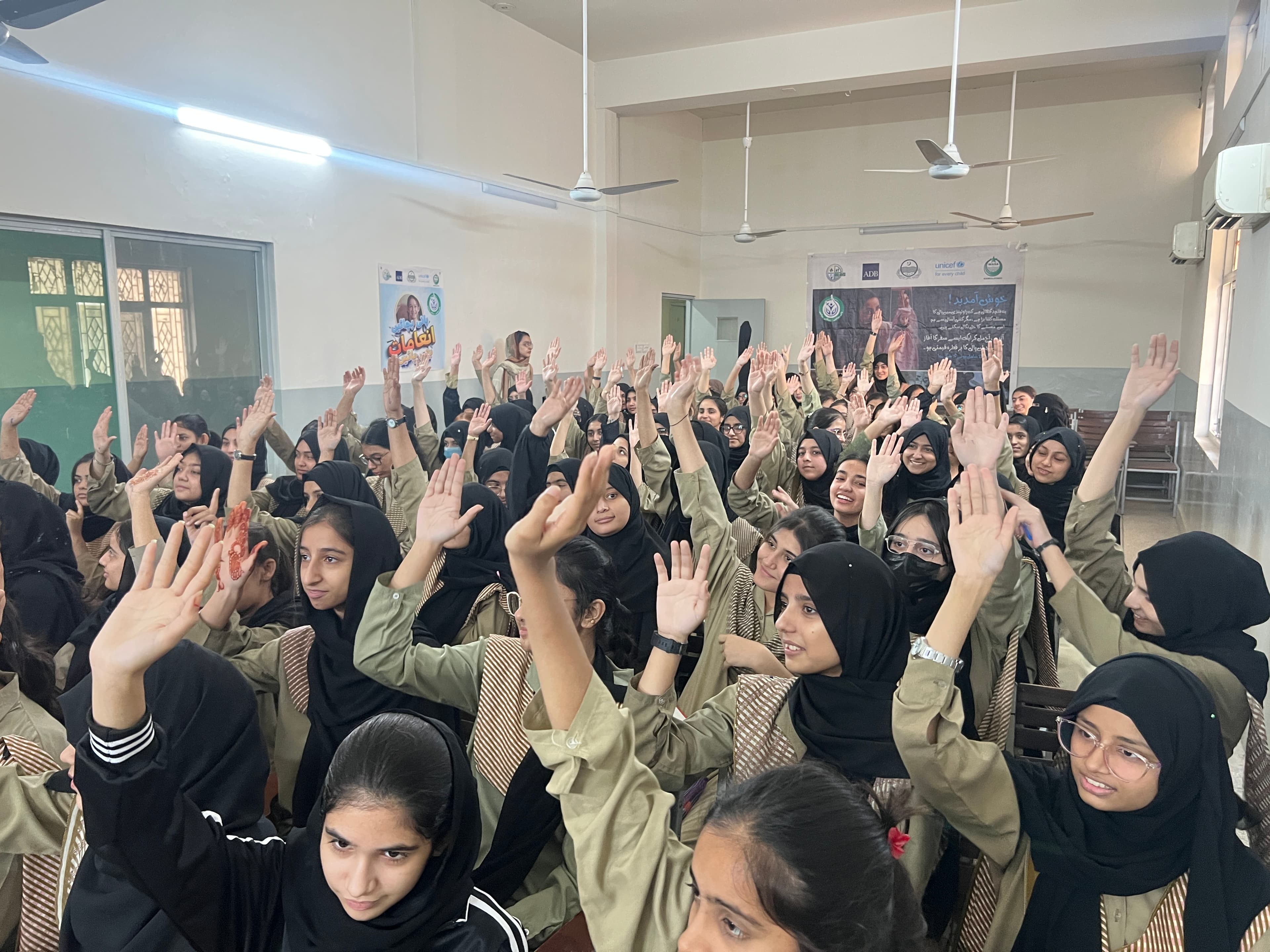
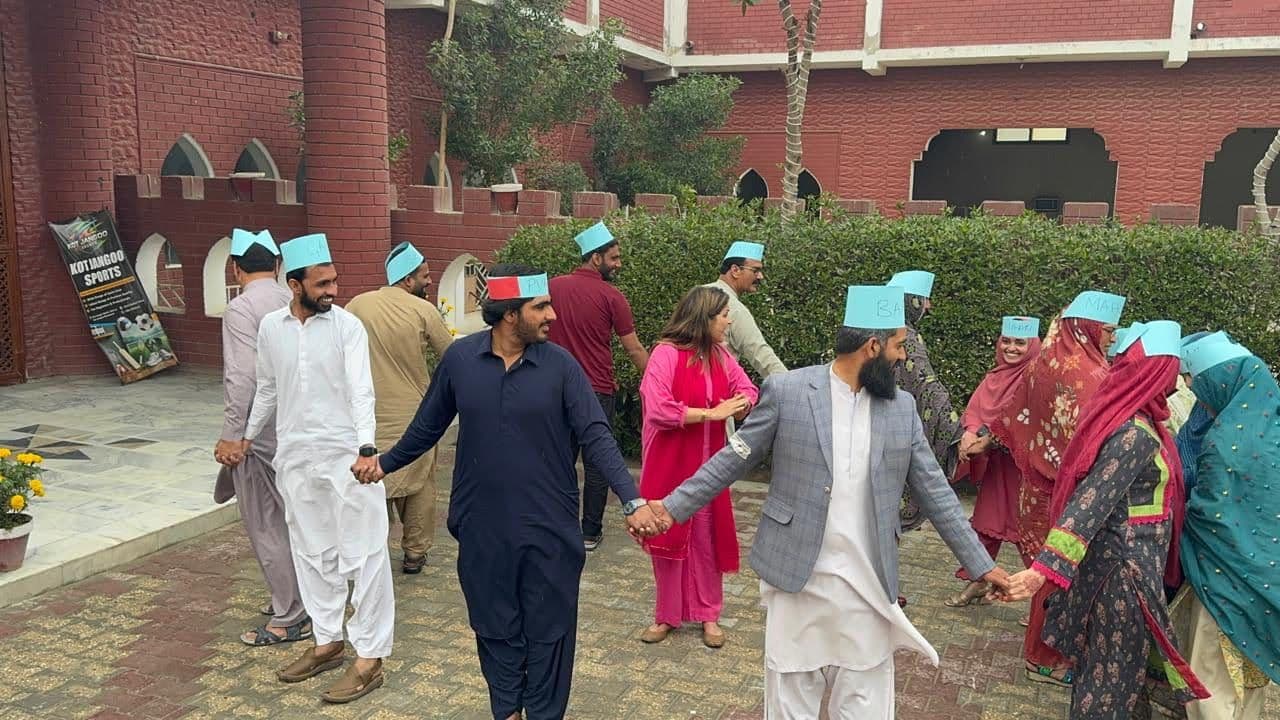
In under three months, White Rice delivered 300+ film screenings across 50 schools in Rawalpindi and Bahawalpur, each a structured event with its own arc: welcome, film, discussion, pledging, visual reminder placement, and real-time documentation. The primary audience was children aged 11–16, complemented by parents, women's groups, teachers, and community leaders. Two-thirds of screenings took place in schools, with a deliberate emphasis on girls' schools. One-third engaged community settings, reaching the women who manage water and waste in their homes daily.
Two original behaviour change films (water conservation & waste segregation)Celebrity talent integration (Sarwat Gillani, Behroze Sabzwari)Structured facilitation methodology and discussion guidesBehaviour pledge and visual reminder toolkit50-school screening programme across 2 citiesSocial mobiliser training and capacity transferReal-time cloud dashboard tracking attendance, testimonials, and photos500+ video testimonials and 2,000+ qualitative verbatimsSustainability handover to DREAM1 Social Mobilisers
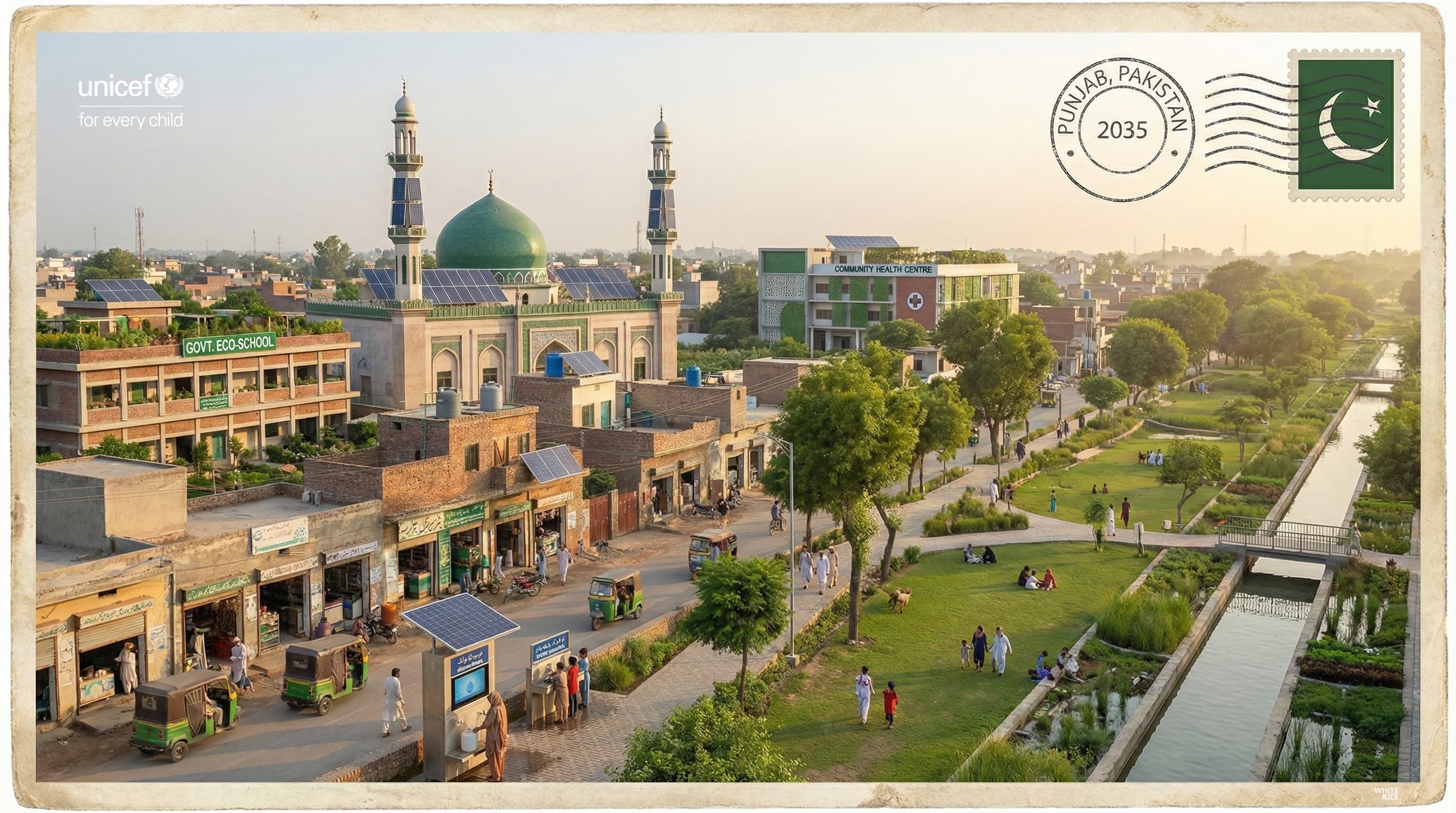
Punjab 2035 vision postcard: a future city with eco-schools, solar panels, and clean green community spaces

Impact

The Multiplier
Each screening of 60–80 participants rippled outward: children carried the conversation home, influencing 200–300 family members. Families talked to neighbours. Neighborhoods shifted. Each screening was not an event. It was a transmission.
Girls at Centre
14,000+ girls and women reached through a deliberate equity design, centering those who manage water and waste in Punjab households every day. Change in behaviour at home requires her participation.
Evidence of Change
2,000+ photos, 500+ video testimonials, and 2,000+ qualitative verbatims captured through real-time monitoring. Families placing stickers by their taps. Children reminding elders. The evidence was not anecdotal. It was documented.
Scaling to 100K
The methodology has been validated and the capacity transferred to DREAMS-I Social Mobilisers. The vision: 100,000 lives reached in the next phase, without White Rice in the room for every screening.

Stories change minds.
Minds change behaviours.
Behaviours change communities.

The Film for Change initiative proved that engaging children and communities through facilitated storytelling is a powerful, scalable approach for driving behaviour change in urban service contexts. The experience offers a replicable, adaptable model that can be embedded within schools, community programmes, and municipal initiatives across Punjab and beyond.
WASHFilm ScreeningsPunjabUNICEFDREAMS-IBehaviour ChangeWater ConservationWaste SegregationEntertainment-EducationClimate ResilienceUrban PunjabRawalpindiBahawalpurGirls EmpowermentSDG 6SDG 11SDG 13
Next Project

PlayLab at Scale

UNICEF
UNICEF - PlayLab at Scale