White Rice20 YEARS
Parental Engagement · Walidain HumQadam · SBC
UNICEF Pakistan · 4 Provinces · 52 Schools

Parents
Walking
Alongside.

Walidain HumQadam — Pakistan’s First Remote SBC Programme for Parental Engagement in Education

A pioneering SBC initiative co-designed with parents, teachers, and communities across Pakistan. Using WhatsApp, vision boards, and peer-to-peer learning to transform parental engagement from a mandatory obligation into a sustained, meaningful practice.

Year2023 - 2024
ClientUNICEF Pakistan
Scale4 Provinces · 6 Cities · 52 Schools
FocusParental Engagement in Education (SBC)
White Rice RoleSBC Design, Co-Creation & Content Lead
Our Role

SBC Design, Research & Full Programme Architecture

White Rice partnered with UNICEF Pakistan to design, co-create, and deliver Walidain HumQadam, Pakistan’s first remotely-delivered SBC programme targeting parental engagement in education. Our role spanned the full programme lifecycle: formative research and co-creation workshops across four provinces, intervention design using the Behavioural Driver Model and Theory of Change, content production for five integrated touchpoints, and a 6.4-million-reach digital campaign.

Formative Research4-Province Co-Creation WorkshopsSBC Theory of ChangeBehavioural Driver ModelWhatsApp Programme DesignVision Board MethodologyTeacher Training ProgrammePTM Framework RedesignP2P Community SessionsDigital Campaign (6.4M reach)
01

Key Outcomes

13,998
Total parents reached through WhatsApp, P2P gatherings, PTMs, digital sharing, and direct teacher outreach across six cities in four provinces.
6.4 Million+
Individuals reached through the digital campaign across Facebook, Instagram, YouTube, and TikTok, generating over 14.7 million impressions.
550+ Canvases
Vision canvases created by parents, teachers, and students across 52 schools. Pakistan’s largest ever visioning exercise in education.
250 Teachers
Trained as Champion Teachers across 52 schools in Islamabad, Lahore, Peshawar, Karachi, Quetta, Sujawal, and Multan.
4,200+ Community
A sustained WhatsApp community of parents and teachers, built for long-term engagement beyond the programme’s formal timeline.
58% of
10-year-olds
can’t read.
Pakistan faces a dual crisis: 25.3 million children out of school, and a learning poverty rate where 58% of 10-year-olds cannot read or comprehend simple texts. Fewer than 30% of parents actively engage with teachers or participate in school activities. Limited parental involvement is one of the most critical yet least-addressed factors in Pakistan’s education emergency. Walidain HumQadam was designed to change that. Not through mandate, but through behaviour change.

The Challenge

Parental engagement in Pakistan's public school system is structurally limited at every tier. Economic pressure means parents prioritise immediate survival over school activities. Low literacy, particularly among mothers, creates deep insecurity about their ability to contribute to their child's education. Teachers managing classrooms of 50+ students have minimal capacity to build parent relationships. And communication between schools and families remains almost entirely paper-based.

Fathers are largely absent from the educational lives of their children, viewing it as the mother's responsibility. Mothers, despite their proximity to children, often lack the confidence, literacy, or mobility to advocate effectively at the school level.

Underlying all of this is a belief, reinforced by real economic reality, that formal education may not reliably lead to better outcomes. Before any behaviour change programme could work, it needed to address this foundational question of value. Walidain HumQadam began not by telling parents what to do, but by helping them remember why they hoped.

Parents consider education a fruitless effort — there are examples in every home where someone who completed their MA or BS is unemployed, so they pay more attention to a shop or other work.

The Strategy

The programme's SBC strategy was built around the Socio-Ecological Model, addressing parental disengagement at the individual, interpersonal, community, and institutional levels simultaneously. The Behavioural Driver Model framed the design across three intersecting forces: psychology (internal beliefs and self-efficacy), sociology (social norms, peer influence), and environment (tools, platforms, and access).

01
Start with Aspiration, Not Instruction
The programme's entry point was a Future Visioning exercise, asking parents to imagine their child's life 10 years ahead. Before any knowledge transfer or behaviour nudge, the programme rebuilt parents' emotional investment in their child's education as the foundation for everything else.
02
WhatsApp as the Programme's Backbone
WhatsApp, already deeply embedded in Pakistani daily life, became the delivery platform for a 30-day habit challenge: bite-sized microlearning, gamification, peer discussion, voice notes, polls, and role model stories. Accessible anywhere, any time, on any phone.
03
Teachers as Programme Champions
Teachers weren’t implementers of someone else’s design. They were trained as Champion Teachers, equipped with practical tools, confidence, and a new understanding of their role as bridges between school and home. The PTM was redesigned from a reporting exercise into a genuine collaborative partnership session.
04
Peer-to-Peer as the Sustaining Force
P2P gatherings built communities of parents who could learn from each other. Sharing experiences, normalising engagement, and creating the social permission for fathers to become involved in ways that Pakistani norms had historically not expected of them.
Co-Creation Process · Designed With, Not For

Four provinces. Four workshops.
One programme shaped entirely by the communities it would serve.

Step 1
Visioning
Participants imagined a transformative future 10 years ahead, setting aspirational tone and emotional investment before any problem-solving
Step 2
Challenge Framing
Stakeholders articulated barriers from their own perspectives, building empathy and identifying root causes of parental disengagement
Step 3
Persona Mapping
Participants created profiles of average Pakistani parents, exploring challenges, opportunities, and aspirations to deepen empathy with the target audience
Step 4
Ideation & Prototyping
Creative solution generation followed by detailed implementation plans, translating ideas into actionable, community-tested blueprints
Step 5
Pre-Mortem
Participants critically evaluated proposed solutions, identifying potential failure points before implementation to build robustness and sustainability
Sindh
Karachi
32
4 students · 9 teachers · 5 parents · 14 influencers
Punjab
Lahore
33
8 students · 14 teachers · 8 parents · 10 influencers
KPK
Peshawar
21
6 students · 5 teachers · 6 parents · 4 influencers
Balochistan
Quetta
25
7 students · 5 teachers · 4 parents · 9 influencers
The Reframed Challenge Statement · Emerging from Co-Creation
“How might we reimagine parental engagement as a dynamic force for realising future aspirations and collective dreams, by empowering parents, students, and teachers to co-create personalised learning journeys?”

The original challenge, “how might we improve parental engagement at home and school?”, was transformed through co-creation into something more meaningful. Not a question about compliance, but about shared ambition. This reframing became the north star for every intervention design decision that followed.

Programme Intervention Design · Five Integrated Touchpoints

Every touchpoint designed to build on the last.

01
Teacher Training & Orientation
Full-day activity-based training sessions introduced programme objectives, built teacher confidence, and positioned educators as Champion Teachers central to the programme’s success.
250 teachers · 52 schools · 4 provinces
02
Future Visioning
Pakistan’s largest-ever visioning exercise. Parents, teachers, and students co-created 550+ vision canvases representing 10-year aspirations for their child’s future, building intrinsic motivation before any instructional content.
500+ parents · 550+ vision canvases
03
WhatsApp Remote Learning
A 30-day habit challenge delivered via WhatsApp, with separate programmes for parents and teachers. Bite-sized microlearning, gamification, polls, voice notes, and 50+ role model videos. Built on COM-B, EAST, and behavioural nudge science. Integrated with ChatGPT and Khan Academy.
4,200+ community · 35% high-performing parents
04
Peer-to-Peer Gatherings
Community-based P2P sessions gave parents a safe space to connect, share experiences, and learn from one another, reinforcing programme behaviours through peer normalisation and collective accountability.
3,080 parents reached through P2P gatherings
05
Redesigned PTMs
Parent-Teacher Meetings were transformed from formal reporting events into collaborative partnership sessions, with structured agendas, student reflection templates, collaborative action plans, and post-PTM follow-up protocols.
4,457 parents reached through PTMs
In Their Own Words

Parents and teachers who changed their minds, and then changed their habits.

As soon as I see the vision board, I remember to ask the children what they learned today. That’s why we pasted it on the wall — so we remember to give our child time every day.
Parent · Visioning Exercise
We realised the importance of bridging the gap between parents, teachers, and students. Working together as a united triangle improves children’s performance and ensures they feel supported.
Teacher · Training Session · Lahore
What we used to think about taking out time but couldn’t manage — became much easier. When a message came, it reminded us and made it simpler to act.
Parent · WhatsApp Programme
We now feel that if their dreams come true, ours will too.
Parent · Vision Board Session
Parents also noticed the difference in this PTM compared to previous ones. This time, we heard more positive things. Apart from academics, we had the opportunity to learn about their personality and behavior.
Parent · Redesigned PTM
We got to learn many different things — very innovative things — in just one day. Creativity sparked in our minds.
Teacher · Training Session
Reach & Impact · By the Numbers

From 500 parents to 14 million impressions.

Total Parents Reached
13,998
Across P2P, PTM, WhatsApp, digital forwarding, and direct teacher outreach
Teachers Trained
250
Across 52 schools in 6 cities and 4 provinces, trained as Champion Teachers
Digital Reach
6.4M+
Individuals reached across Facebook, Instagram, YouTube, and TikTok
Digital Impressions
14.7M+
Total campaign impressions, including a Balochistan role model story aired on national television
Facebook & Instagram
5,377,689 reach
11,908,859 impressions
YouTube
816,536 reach
2,391,231 impressions
TikTok
213,049 reach
464,283 impressions

The Impact

Walidain HumQadam was the first programme of its kind in Pakistan: a remotely-delivered, WhatsApp-native SBC intervention designed to shift parental engagement in education at scale. The results demonstrated both the viability of the model and its readiness for national rollout.

Pakistan’s First
Remotely-delivered SBC programme for parental engagement in education. A tested, validated framework ready for national implementation.
550+ Vision Boards
Pakistan’s largest-ever visioning exercise. The aspiration gap became the motivation engine for the entire programme.
Cultural Shift
Fathers from Sujawal and Multan sharing programme content on social media. A Multan father discussing Walidain HumQadam on live television. Behaviour changed publicly, not just privately.
4,200+ Community
A lasting WhatsApp community of parents, teachers, and educators, providing the infrastructure for sustained engagement long after the formal programme concluded.
AI-Integrated
First government-school SBC programme in Pakistan to integrate ChatGPT and Khan Academy as accessible learning tools within a WhatsApp-native delivery model.
Scale-Ready
A 4-week WhatsApp programme, refined through six cities and four provinces. Fully validated and ready for national deployment across thousands of schools.

Walidain HumQadam proved that parental engagement in education is not an infrastructure problem. It’s a behaviour change problem. One that starts with aspiration, is sustained through habit, and scales through technology. Pakistan now has a tested blueprint. What it needs next is the national commitment to use it.
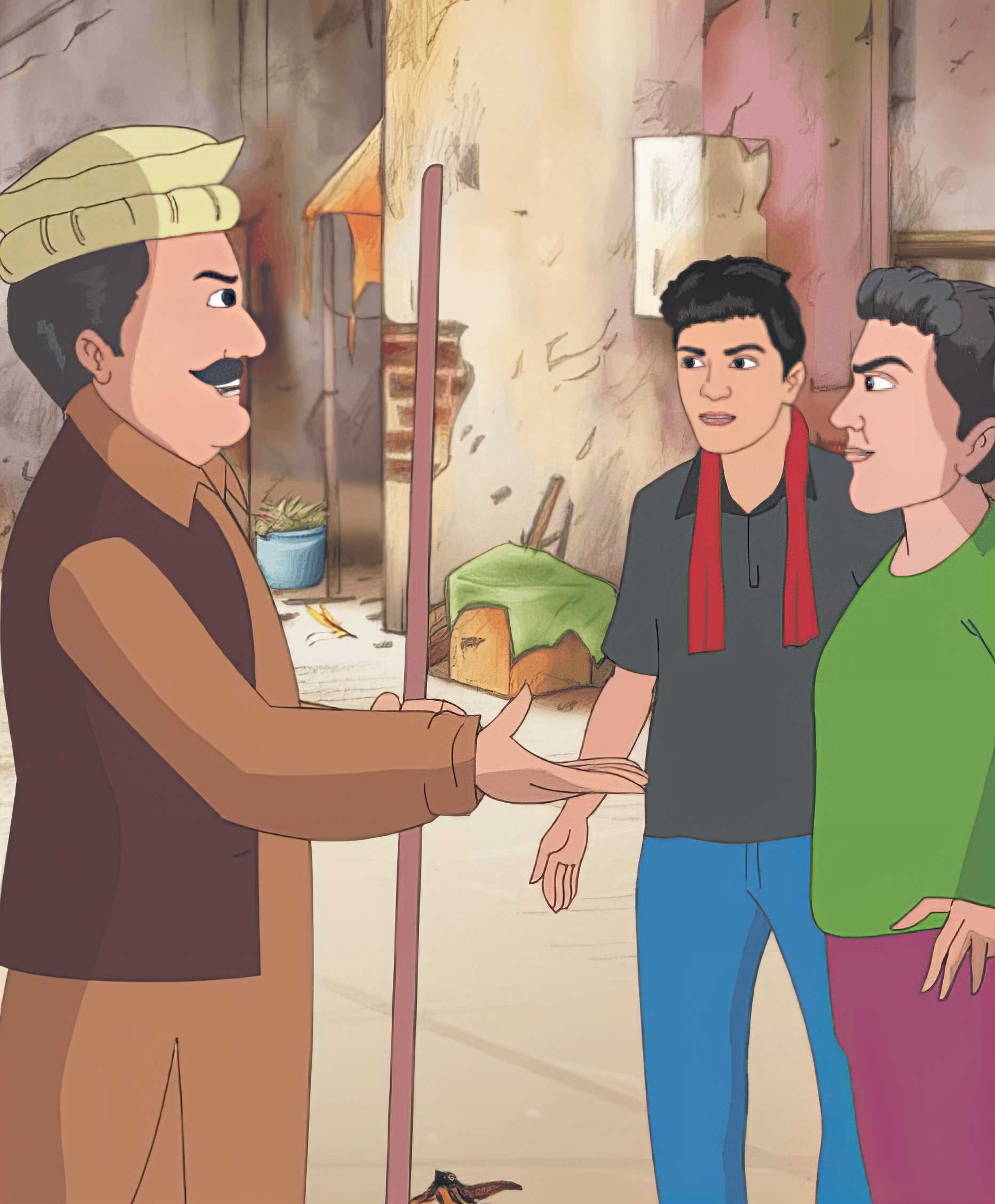
Parents who remember
why they hoped
show up differently.

Walidain HumQadam proved that parental engagement in education is not an infrastructure problem. It’s a behaviour change problem. One that starts with aspiration, is sustained through habit, and scales through technology. Pakistan now has a tested blueprint. What it needs next is the national commitment to use it.

Parental EngagementWalidain HumQadamSBCWhatsApp LearningFuture VisioningTeacher TrainingPTM RedesignCo-CreationUNICEF Pakistan4 ProvincesRemote DeliverySDG 4Pakistan
Next Project

Apni Kahani

UNFPA Pakistan
UNFPA Pakistan - Apni Kahani